
HACCP Certification
1. Establishing a management system as a HACCP factory
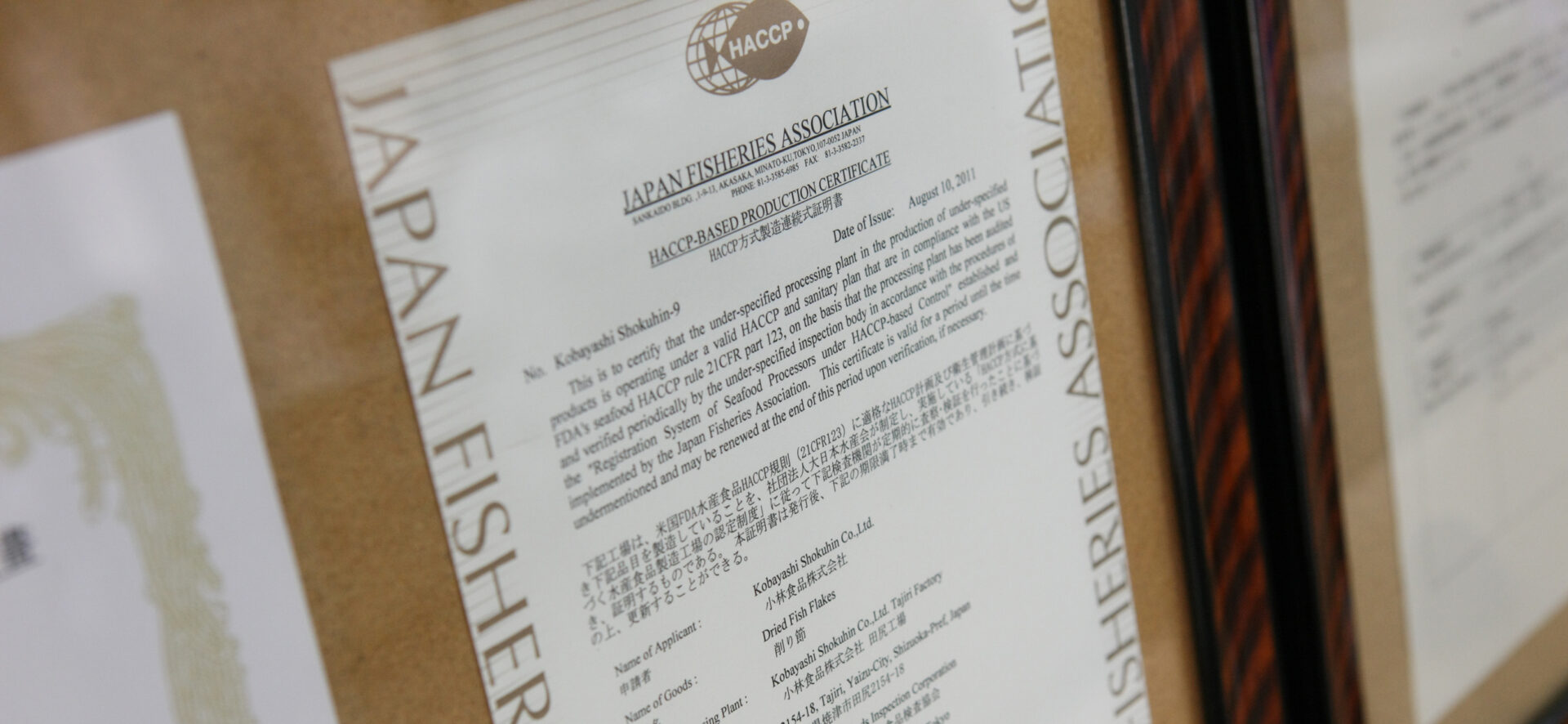
The HACCP system is a food safety management method adopted worldwide, including in Europe and the United States. The shavings department of the Tajiri Factory received
HACCP certification in August 2007.
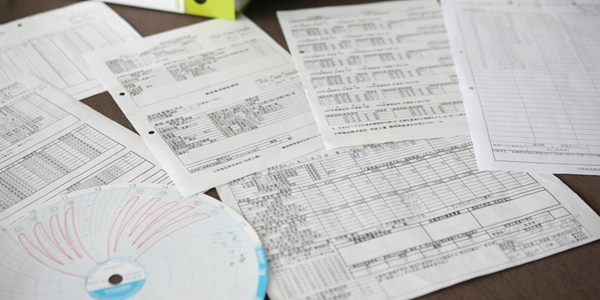
We undergo ongoing inspections, with provisional inspections every six months and full inspections every two years, to establish a management system as a HACCP factory, and have rolled out similar management to other departments and factories, implementing various record sheets and 5S. We
strive to be a factory where customers can use our products with peace of mind.
| HACCP certification | Kobayashi Foods Co., Ltd. |
|---|---|
| Certification body | Japan Food Accreditation Organization (General Incorporated Association) |
| Inspection Agency | Japan Food Inspection Foundation |
What is HACCP?
“HACCP” is an acronym for Hazard Analysis Critical Control Point.
HACCP (pronounced “hassup,” “hasep,” “eichiaccp,” etc.) is a food quality control method developed in the United States in the 1960s to ensure the safety of space food. In 1973, the U.S. Food and Drug Administration (FDA) adopted it as a legal regulation for low-acid canned foods, and in 1997 it was also adopted for fish and shellfish. It is a regulation to ensure the safe production and import of food.
This method allows food manufacturers to ensure the provision of safer food by identifying where hazards may occur in the food manufacturing process, monitoring the process, and taking control to prevent hazards from occurring.
Hazard Analysis = Analysis of hazard factors
We analyze potential hazards at each stage of food manufacturing (receiving raw materials, manufacturing, and shipping).
Critical Control Point = Important Control Point (Mandatory Control Point)
We will decide how to manage the hazards identified in the hazard analysis, identify the most important processes, and keep records of them.
Simply put, it is a system that allows for the production of safe food by deciding on preventative measures in advance and implementing them daily, and it is a system that can guarantee the entire product by controlling hazards “from raw materials to the consumer,” which could not be guaranteed by checking sampling points using “spot checks” as in the conventional quality control method.
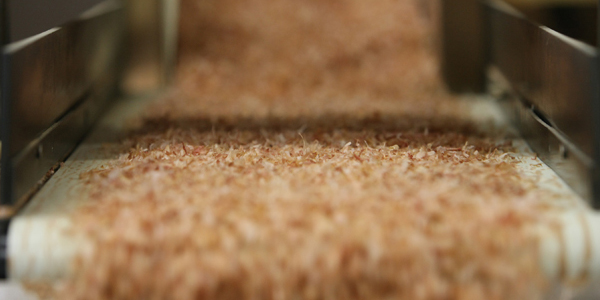
Kobayashi Foods Co., Ltd.’s head office factory uses this HACCP method to produce “shaved bonito flakes” and guarantees the product.
There are seven principles of a HACCP plan.
① Conduct a hazard analysis.
② Identify important control points.
③ Set methods and standards for managing them.
④ Monitor the most important points among them.
⑤ Determine measures to be taken if standards are not met.
⑥ Decide on a verification method.
⑦ Record, store, and document the results.
When developing the HACCP system, we used a questionnaire called a hazard analysis worksheet, and based on the seven principles above, we performed a hazard analysis for every process, from receiving raw materials through processing, shavings, and packaging to the finished product, and set control points. Specifically,
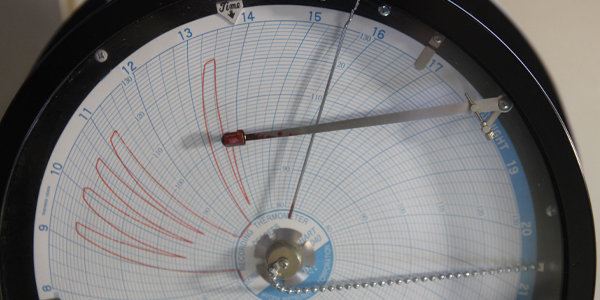
there is a sterilization process for the raw material, “bonito flakes,” and since there is concern that pathogens may survive if the sterilization conditions are not met, we have set the “steaming process” as a “CCP (critical control point)” and are operating it by recording and verifying the temperature and time.
In addition, the cutting process involves cutting the dried bonito flakes using a shaving machine, and there are concerns that the blades may chip and cause contamination. Therefore, we have designated the metal detection process as a critical control point (CCP) and are conducting records and verifications.
In the industry, HACCP certification is obtained for each item, but what makes us unique is that we have obtained HACCP for the entire line.
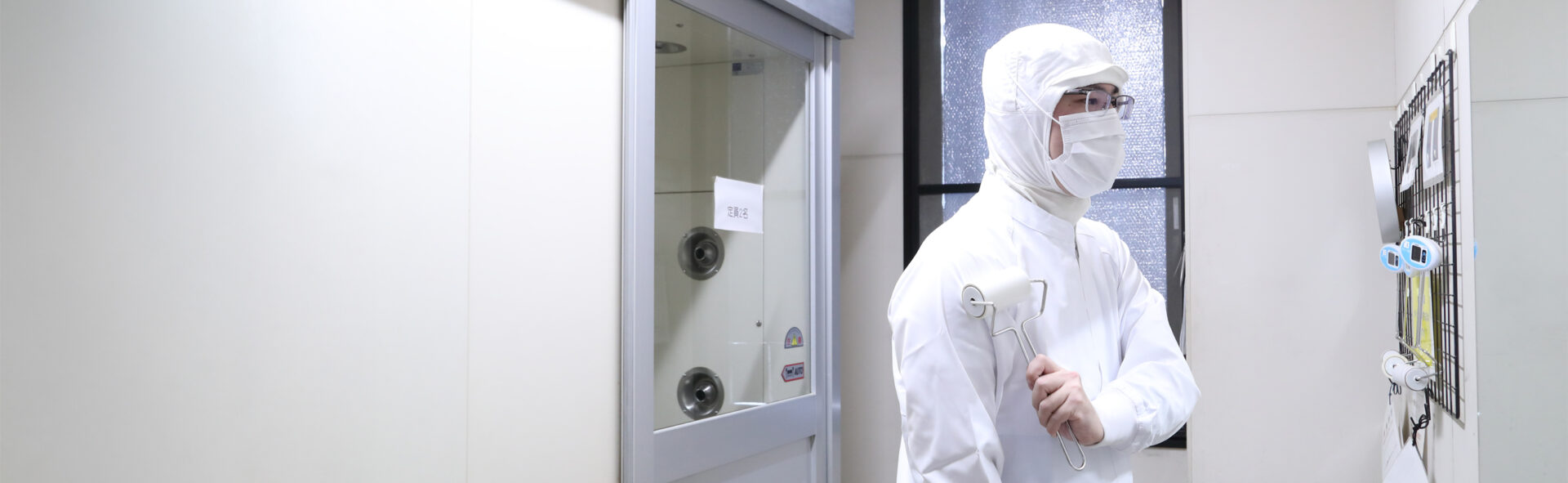
2. Hygiene management system
We strive to create an environment where customers can use our products with peace of mind.
3. Employee training
We provide employee training when they join the company and on a regular basis to thoroughly educate them on the rules, the importance of hygiene, the possibility of foreign matter contamination, etc., in order to improve the skills of our manufacturing staff.
4. In-house factory inspection
We conduct factory inspections at each factory every month. We audit factories internally from a strict perspective and respond immediately to any issues that are pointed out.